Posts

STP Marketing

Image
 Around 91% of the customers prioritize personalized products over custom ones.  Personalization not only sets a company apart but also fosters better relationships with the consumers.  Very often, a majority of companies are stuck at improving personalization. STP Marketing – Segmentation, Targeting and Positioning, is a three-step model that allows the examination of the company products or services as well as the way you communicate their benefits to specific customer segments. STP marketing represents a shift from product-focused marketing to customer-focused marketing. This allows businesses to have a better understanding of their target audience and prioritize resources accordingly. 1. Segmentation- refers to the division of marketing into a distinct group of customers (the divisions are referred to as segments), using various segmentation practices. Source: www.yieldify.com 2. Targeting- refers to the determination of which segment /customer group to focus resource...

B2C Marketing

Image
 Business-to-consumer marketing, or B2C marketing, refers to the tactics and strategies in which a company promotes its products and services to an individual: creating, advertising, and selling products for customers to use in their everyday lives. Businesses that focus on B2C marketing have to closely observe trends, extensively research their customers’ purchase habits, and closely monitor their competitors’ tactics.  Source: www.analyticssteps.com 9/10 consumers will pay more for a better customer experience, and approximately 60% of the consumers will try a new brand just for a better experience. This is why, in the digital age that we currently reside in, it’s vital to engage customers and not interrupt them. Smartphones, with unlimited access to the internet, has provided consumers with 24/7 access to any information at the tip of their fingers. Brands must be prepared to meet them on their device and channel of preference. The number of social media apps available to c...

Controversial marketing

Image
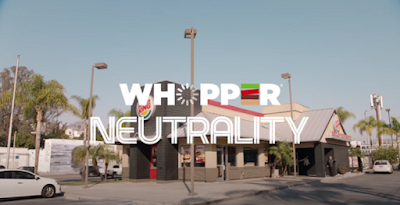
Can you believe how far marketers will go to promote their brand, even if it means instigating controversies? Controversial marketing is the deliberate creation of promotional content that is likely to elicit criticism, spark debate, and insult the public. In the most primitive sense, controversial marketing alludes to its use of controversy as a marketing ploy for many at times- it acts like a surprising Mike Tyson’s upper-cut that no one saw coming. Potential Effects of Controversial Marketing Without that controversial video, Kim Kardashian and the rest of her siblings may not be the marketing moguls they are today. Of course, not every brand would dare go to such extremes. Below are some of the things controversial marketing can do to your brand. Pros: Creates buzzElicits emotion Makes your brand unforgettable Cons: Destroy Brand Image Brand boycott Brand out of focus Controversies that did work:- Burger King: Whopper Neutrality (2018) Source: www.becausexm.com  Burger King us...

Personalized marketing

Image
Personalized marketing is the implementation of a strategy by which a company delivers individualized content to recipients through data collection, analysis, and the use of automation technology. The goal of personalized marketing is to truly engage customers or prospective customers by communicating with each other as an individual. There are numerous advantages of personalized marketing- for both businesses and consumers. Customers are more comfortable providing personal information to their favourite brands if they get something in return. They fill out forms, participate in surveys to get discounts, and indicate their favourite purchases or preferences. Source: www.clevertap.com  So, what’s the catch?  With all of this customer data being offered to the company, the consumer expects brands to protect any sensitive information and offer more personalized experiences when they come back. When consumers provide information and data , they expect to be treated as unique in...

Organic marketing vs paid marketing

Image
 The term ' Digital Marketing' was first used in the 1990s. Since then, the concept has grown stupendously intertwined with rapid technological innovation and development. Companies heavily rely on digital marketing to globalize their brand and products. It is a well-known fact that digital marketing is in a constant state of flux , and so, companies evolve to keep up with the latest trends. A majority of companies often switch between the two primary branches of digital marketing - organic marketing and paid marketing. The question is - which one is better for effective utilisation of resources and ensuring maximum output. Source: www.yourlistingexpert.com Organic marketing also known as inbound marketing, primarily refers to any form of digital marketing that does not include paid advertisements. The goal is to connect with the consumers so that the brand or product remains their first preference. It is the best marketing strategy to build a long-lasting brand and establish ...

Use of experimental non-traditional marketing strategies

Image
  A company's ultimate goal is to be the best at what they do, regardless of the industry. Hence, they go all-in with their resources to ensure that their product does not become obsolete and market it with style. A majority of companies often adapt to the trending strategies and evolve for exponential sales. What sets a company apart aside from its unique style is the amount of funds allocated for marketing. Despite the evolution of digital marketing, the solid foundation of the product launches heavily depends on traditional marketing means such as direct mail, print media marketing (newspapers & magazines), broadcast, outdoor media or direct selling. So, it's a surprise when companies go against the usual norm and try something different with almost little to no advertising. What's incredibly surprising is that these tactics worked, and their experiments paved the way to establish a legacy unparalleled to any. The following list is names of companies we have all des...

Tools for Digital Marketing

Image
You can’t please everyone all the time. However, as a marketer, it is your responsibility to try to disapprove of this assertion. Generally, the question that arrives at anyone’s mind is - “Why do we need Marketing?”.  Well, at present in this thriving world, even the most basic product needs to be marketed for its growth so one can answer this sprightly - “Marketing is important because it allows businesses to maintain long-lasting and ever-present relationships with their audience”.  However, for people unfamiliar with the term marketing, one needs to be briefed on the most basic step. Marketing is the creation, communication, and delivery of value, as well as the management of customer relationships for a lifetime. From a societal standpoint, marketing is the link between a society's material needs and its economic patterns of responses. Marketing satisfies the needs and desires of the seller through the exchange processes and the development of long-term relationships wit...
